Friday, 1 June 2012

CHAPTER I


Shri Sai Satcharitra
Chapter I

Salutations -- The Story of Grinding Wheat and Its Philosophical Significance.

According to the ancient and revered custom, Hemadpant begins the work, Sai Satcharitra, with various salutations.

First, he makes obeisance to the God Ganesha to remove all obstacles and make the work a success and says that Shri Sai is the God Ganesha. Then, to the Goddess Saraswati to inspire him to write out the work and says that Shri Sai is one with this Goddess and that He is Himself singing His own life.Then, to the Gods; Brahma, Vishnu and Shankar - the Creating, Preserving and Destroying Deities respectively; and says that Sainath is one with them and He as the great Teacher, will carry us across the River of Wordly Existence. Then, to his tutelary Deity Narayan Adinath who manifested himself in Konkan - the land reclaimed by Parashurama, (Rama in the Hindi version) from the sea; and to the Adi (Original) Purusha of the family. Then, to the Bharadwaja Muni, into whose gotra (clan) he was born and also to various Rishis, Yagyavalakya, Bhrigu, Parashara, Narad, Vedavyasa, Sanak, Sanandan, Sanatkumar, Shuka. Shounak, Vishwamitra, Vasistha, Valmiki, Vamadeva, Jaimini, Vaishampayan, Nava Yogindra etc, and also modern Saints such as Nivritti, Jnanadev, Sopan, Muktabai, Janardan, Ekanath, Namdev, Tukaram, Kanha, and Narahari etc. Then, to his grandfather Sadashiv, father Raghunath, his mother, who left him in his infancy, to his paternal aunt, who brought him up, and to his loving elder brother. Then, to the readers and prays them to give their whole and undivided attention to his work. And lastly, to his Guru Shri Sainath - an Incarnation of Shri Dattatreya, Who is his sole Refuge and Who will make him realize that Brahman is the Reality and the world an illusion; and incidentally, to all the Beings in whom the Lord God dwells.
After describing in brief the various modes of devotion according to Parashara, Vyasa and Shandilya etc., the author goes on to relate the following story:


"It was sometime after 1910 A.D. that I went, one fine morning, to the Masjid in Shirdi for getting a darshan of Sai Baba. I was wonder-struck to see the following phenomenon. After washing His mouth and face, Sai Baba began to make preparations for grinding wheat. He spread a sack on the floor; and thereon set a hand-mill. He took some quantity of wheat in a winnowing fan, and then drawing up the sleeves of His Kafni (robe); and taking hold of the peg of the hand-mill, started grinding the wheat by putting a few handfuls of wheat in the upper opening of the mill and rotoated it. I thought ‘What business Baba had with the grinding of wheat, when He possessed nothing and stored nothing, and as He lived on alms!’ Some people who had come there thought likewise, but none had the courage to ask baba what He was doing. Immediately, this news of Baba's grinding wheat spread into the village, and at once men and women ran to the Masjid and flocked there to see Baba's act. Four bold women, fro m the crowd, forced their way up and pushing Baba aside, took forcibly the peg or handle into their hands, and, singing Baba's Leelas, started grinding. At first Baba was enraged, but on seeing the women's love and devotion, He was much pleased and began to smile. While they were grinding, they began to think that Baba had no house, no property, no children, none to look after, and He lived on alms, He did not require any wheat-flour for making bread or roti, what will He do with this big quantity of flour? Perhaps as Baba is very kind, He will distribute the flour amongst us. Thinking in this way while singing, they finished the grinding and after putting the hand-mill aside, they divided the flour into four portions and began to remove them one per head. Baba, Who was calm and quiet up till now, got wild and started abusing them saying, "Ladies, are you gone mad? Whose father's property are you looting away? Have I borrowed any wheat from you, so that you can safely take the flour? Now please do this. Take the flour and throw it on the village border limits." On hearing this, the women felt abashed and whispering amongst themselves, went away to the outskirts of the village and spread the flour as directed by Baba.

I asked the Shirdi people - "What was this that Baba did?" They replied that as the Cholera Epidemic was spreading in the village and this was Baba's remedy against the same; it was not wheat that was ground but the Cholera itself was ground to pieces and pushed out of the village. From this time onward, the Cholera Epidemic subsided and the people of the village were happy. I was much pleased to know all this; but at the same time my curiosity was also aroused. I began to ask myself - What earthly connection was there between wheat flour and Cholera? What was the casual relation between the two? and how to reconcile them? The incident seems to be inexplicable. I should write something on this and sing to my heart's content Baba's sweet Leelas. Thinking in this way about this Leela, my heart was filled with joy and I was thus inspired to write Baba's Life - The Satcharita.
And as we know, with Baba's grace and blessing this work was successfully accomplished.

Philosophical Significance of Grinding
Apart from the meaning which the people of Shirdi put on this incident of grinding wheat, there is, we think, a philosophical significance too. Sai Baba lived in Shirdi for about sixty years and during this long period, He did the business of grinding almost every day - not, however, the wheat alone; but the sins, the mental and physical afflications and the miseries of His innumerable devotees. The two stones of His mill consisted of Karma and Bhakti, the former being the lower and the latter the upper one. The handle with which Baba worked the mill consisted of Jnana. It was the firm conviction of Baba that Knowledge or Self-realization is not possible, unless there is the prior act of grinding of all our impulses, desires, sins; and of the three gunas, viz. Sattva, Raja and Tama; and the Ahamkara, which is so subtle and therefore so difficult to be got rid of.
This reminds us of a similar story of Kabir who seeing a woman grinding corn said to his Guru, Nipathiranjana, "I am weeping because I feel the agony of being crushed in this wheel of wordly existence like the corn in the hand-mill." Nipathiranjana replied, "Do not be afraid; hold fast to the handle of knowledge of this mill, as I do, and do not wander far away from the same but turn inward to the Centre, and you are sure to be saved."


"Bow to Shri Sai -- Peace be to all"

SHRI SAI SATCHARITHA


  • CHAPTER VIII
  • CHAPTER IX
  • CHAPTER X
  • CHAPTER XI
  • CHAPTER XII
  • CHAPTER XIII
  • CHAPTER XIV
  • CHAPTER XV
  • CHAPTER XVI & XVII
  • CHAPTER XVIII & XIX
  • CHAPTER XX
  • CHAPTER XXI
  • CHAPTER XXII
  • CHAPTER XXIII
  • CHAPTER XXIV
  • CHAPTER XXV
  • CHAPTER XXVI
  • CHAPTER XXVII
  • CHAPTER XXVIII
  • CHAPTER XXIX
  • CHAPTER XXX
  • CHAPTER XXXI
  • CHAPTER XXXII
  • CHAPTER XXXIII
  • CHAPTER XXXIV
  • CHAPTER XXXV
  • CHAPTER XXXVI
  • CHAPTER XXXVII
  • CHAPTER XXXVIII
  • CHAPTER XXXIX & L
  • CHAPTER XXXX
  • CHAPTER XXXXI
  • CHAPTER XXXXII
  • CHAPTER XXXXIII & XXXXIV
  • CHAPTER XXXXV
  • CHAPTER XXXXVI
  • CHAPTER XXXXVII
  • CHAPTER XXXXVIII
  • CHAPTER XXXXIX
  • CHAPTER L

Tuesday, 3 April 2012

UCCHI PILLAYAR TEMPLE

UCCHI PILLAYAR
NAME OF THE DEITY : உச்சிப் பிள்ளையார், Ucchi Pillayar
LOCATION : TIRUCHI  TAMILNADU, INDIA
DATE BUILT : 7th CENTURY AD


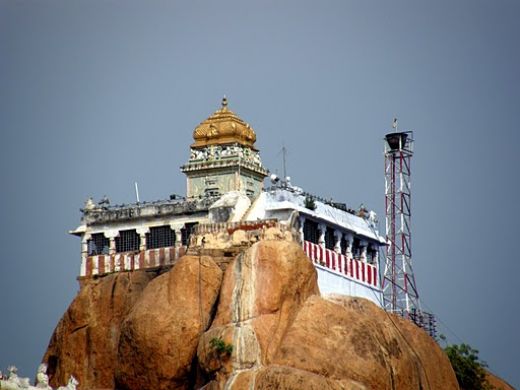
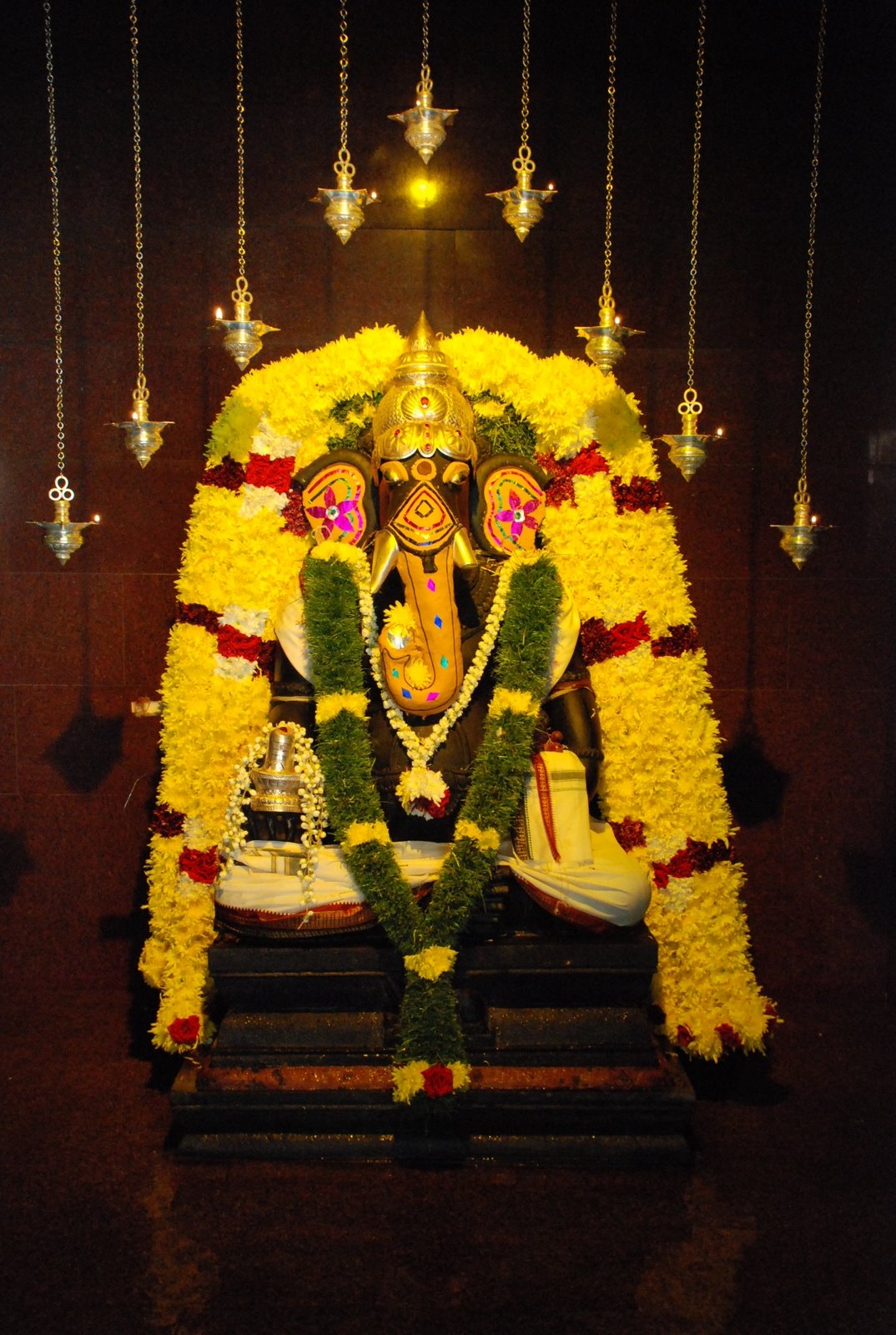
UCCHI PILLAYAR temple is the one dedicated to Lord Ganesh located a top of Rockfort, Trichy, India.Mythologically this rock is the place where Lord Ganesh ran from King Vibishana, after establishing the Ranganathaswamy deity in Srirangam.

ABOUT THE TEMPLE
The Rock Fort temple stands 83m tall perched atop the rock. The smooth rock was first cut by the Pallavas but it was the Nayaks of Madurai who completed both the temples under the Vijayanagara empire.
The temple is situated at the top of the rock. The temple is mystic in its nature with an awe-inspiring rock architecture. The Ganesh temple is much smaller with an access through steep steps carved on the rock and provides a stunning view of Trichy, Srirangam and the rivers Kaveri and Kollidam. Due to its ancient and impressive architecture created by the Pallavas, the temple is maintained by the Archaeological department of India.

HISTORY 
Rockfort or Ucchi Pillayar koil, is a combination of two famous 7th century Hindu temples, one dedicated to Lord Ganesh and the other dedicated to Lord Shiva, located a top of a huge rock in Trichy, India. Geologically the 83m high[1] rock is said to be one of the oldest in the world, dating over 3 billion years ago, and mythologically this rock is the place where Lord Ganesh ran from King Vibishana, after establishing the Ranganathaswamy deity in Srirangam.

Vibhishana, was the younger brother of the Asura King Ravana who ruled Lanka. Lord Rama in the epic of Ramayana rescues his wife Sita, who was kidnapped and held by Ravana, with the help of Sugriva and Hanuman defeated him. In this war, the moral and truth-abiding brother of Ravana, Vibishana aids Rama in his battle against his brother. Ultimately Rama wins the war and as a token of love, He gifts Vibishana a vigraham (idol for worship) of Lord Ranganatha, a form of Vishnu.
Vibhishana, though he supported Rama, was basically an Asura, hence the Devas (who are arch rivals to Asuras as per Hindu mythology) wanted to stop this idea of an Asura taking Lord's supreme form to his Kingdom. They request the help of the Remover of obstacles and God of learning, Lord Vinayaka and the Lord accepts the plan. Vibhishana, while on his back to his Kingdom, goes through Trichi, and wanted to take his bath in the river Kaveri and do his daily rituals. However, he is perplexed as the deity, once kept in land, can never be removed and has to be in that place forever.
As a solution, Vibishana tries to find someone to hold the deity while he was taking bath. He finds the Lord Vinayaka under disguise of a cowherd boy. As per the plan, when Vibishana is fully into water, Vinayaka takes the deity and keeps it firmly in sand, in the banks of kaveri. On seeing this, the angry Vibhishana chases the boy, to punish him, and boy keeps running and climbs over the rock near the Kaveri bank. Vibhishana finally reaches the boy and hits him on the fore-head of little boy who then reveals himself to be Vinayaga. Vibishana immediately apologizes and the Lord gives him his blessings and sends him off to Lanka. This is similar to the story Of Lord Ganesh in Gokarna with Ravana in the same Ramayana period..

The place on which the Ranganathan deity was kept was later covered in deep forests, due to disuse and after a very long time, it is discovered when a Chola king chasing a parrot finds the deity accidentally. He then establishes the Ranganathaswamy temple, Srirangam as one of the largest temple complexes in the world. Meanwhile, the Pallavas built the Vinayaka temple and the Thayumanaswamy temple, in the rock which Vinayaka uses to escape Vibishana.


Sunday, 1 April 2012

KARPAGA VINAYAGAR TEMPLE

KARPAGA VINAYAGAR
NAME OF THE DEITY : கற்பக விநாயகர் ; Karpaka Vinayakar
LOCATION : THIRUPPATHUR, SIVAGANGAI (Dt)                TAMILNADU, INDIA
DATE BUILT : 4th CENTURY


HISTORY

Pillaiyar patti Pillaiyar temple is an ancient rock-cut cave shrine dedicated to Ganesha, located at Thiruppatthur (1 km from Thiruppatthur bus stand or Thiruppatthur Thiruthalli nathar Temple (One of the Thevera Temple), Sivaganga district in the state of Tamil Nadu, India
The Ganesh Chaturthi / Vinayaka Chaturthi festival, is celebrated for 10 days in a grand manner every year during the months of August and September. During that time, great number of pilgrims gather and participate in the Car Festival.Like all Shaivite temples, Pillayarpatti temple also has Lord Shiva as its presiding deity. Lord's name is Arjunapureeswarar. This temple is more famous for the rock cut Vinayagar (Ganesha) sitting majestically inside a cave.
Pillaiyarpatti is located in Thiruppathur, Sivagangai District of Tamil Nadu. It is situated between Kundrakkudi and Tiruppatthur. Pilliyarpatti is just one Kilometer away from Thiruppatthur and 3 kilometers from Kundrakkudi. Pillaiyarpatti Karpaga Vinayagar is carved out in a cave of Pillaiyarpatti Hillocks. Lord Vinayagar is carved out from the rock of the cave. Lord Thiruveesar is also carved in the rock of this cave. The temple was built under patronisation of Pandyas. The age of the cave temple is 2500 years or more. There are 14 stone Sculptures in the cave ( dated from 500 BC to 1284 AD ). These stone Sculptures state that ancient names of Pillaiyarpatti as Ekkattoor, Thiruveenkaikkudi, Maruthangudi, and Rajanarayanapuram.
Pillaiyarpatti temple is a rock - cut temple located in Thiruppatthur, Sivagangai District. It was built after viewing a hillock by the early Pandiya kings and the image of Pillaiyarpatti Pillaiyar and that of a Siva Lingam were carved out of a stone by a sculptor called Ekkattur Koon Peruparanan who put his signature on a stone inscription found even today in the sanctum. He put his signature in Tamil Language which was in use between 2nd and 5th century AD. It can be concluded that the icon of Pillaiyarpatti Pillaiyar must have been carved around 4th century AD.
Pillaiyar (Vinayagar), the God of Victory is the main deity here in the name, Pillaiyarpatti Pillaiyar.
This temple is the only one in Tamil Nadu which contains a 6 feet rock-cut Pillaiyar idol. The Thumbikai of Lord Pillaiyar is curled towards his right side and so the God is also known as Valampuri Pillaiyar. The chettiyar (nagarathar) community has done/been doing an outstanding job in maintaining the temple and the temple is clean.Still now chettiars are the only community whose subcaste are divided based on Sivan Temples. For e.g. there are subcastes like Pillayarpatti, Elayatrankudi and etc.
  • Vinayagar’s trunk is curved at the right side ( Valampuri Vinayagar) which is also a unique feature. Lord Karpaga Vinayagar is seated facing northern side.
  • There are deities in this temple such as goddess Karthiyayini ( who arrange marriages), Nagalingam ( who gifts offsprings ), Pasupatheeswarar ( who showers all wealth).
  • Vinayagar Chathurthi is the very important festival in this temple. It is 10 days festival. Kappaukkattutual and hoisting temple flag begin before 9 days. At the 9 th day car festival and much celebrated decoration of sandal covering ( Santha-na-kkappu) to Pillaiyar takes place.
  • Devotees who observe Chathurthi Fast for a year come to Pillaiyarpatti on Avani Sukkilaptcha Chathurthi day (Festival) and fulfills it. They observe fast on Chathurthi day in front of vinayagar sannaidhi and take part in “ KumnaJebam” and receive holy pot of chanted holy water.
ABOUT THE TEMPLE
The town of Pillaiyarpatti is named after 'Pillayar' - the tamil name for Ganesha, and this ancient temple houses rock cut images of Shiva, Lingodbhavar and others as well as several other shrines. Steeped in the tradition of Agamic textsthe temple bears testimony to the vibrant temple culture of the Tamil people, passed down through centuries.

Antiquity: Over 15 inscriptions are found within the temple, that help establish the age of the temple. The Stalapuranam published by the temple classifies the growth of this temple into three distinct stages.

The first stage goes back in time by about 1600 years. During this period, the innermost rock cut shrines housing Karpaka Vinayakar and Tiruveesar came into being. The uniqueness of the image of Ganesha is one factor testifying this date; the characters used in the temple inscriptions also help establish this date. The pillars within the shrine are of pre-Pallava origin.

The Pallavas were prolific builders of rock cut temples (Mahabalipuram, Mahendravadi, Mamandur, Mandakapattu, Seeyamangalam, Namakkal, Tiruchi, Nartamalai, Kudumiyanmalai, Tirukkokarnam, Tirumeyyam, Peraiyur, Malayadipatti, Tirukolakkudi, Kunrakkudi etc.). A number of these can be traced to Mahendravarman I (615 - 630 AD) and Narasimhavarman I (630 - 668 AD). However, the inscriptions at Pillayarpatti date further back to the 4th century AD. Also, given the location of the temple in the Pandya kingdom it would only be logical to associate Pandya patronage to this temple, especially in the light of Pandya patronage at the Kazhugumalai temple not too far from here. There are several inscriptions within this temple that date back to the period between 1091 AD and 1238 AD, making it apparent that the Pillayarpatti Nagarattar became the custodians of the temple during the 13th century AD during the second growth phase of this temple, when Vimanams and Rajagopurams were built.

The third phase of growth is much more recent and it involved the repair, rebuilding and refurbishment of the entire temple complex, including the renovation of the temple tank. The tank and the two Raja Gopurams provide an attractive approach to the temple, in this rather remote town of Pillayarpatti.


VINAYAGAR TEMPLES

"VINAYAGAR CHATURTHI" celebrated every year on Aavani is the important festival of this village. This festival is celebrated for 10 days in a grand manner. The festival will begin with Kappukattu and flag hoisting on the first day, cultural programs are conducted from 6th day onwards. During the day and night, Lord Vinayaga is taken around in procession through the streets where he is seated in different vahanams every day.


1st day Silver Muueshika Vahanam
2nd day Simma Vahanam
3rd day Boodha Vahanam
4th day Kamala Vahanam
5th day Siver Rcishaba Vahanam
6th day Silver Elephant Vahanam upto Kagamugasura Samkaram and then in Golden Bandicoot Vahanam
7th day Silver Peacock Vahanam
8th day Horse Vahanam
9th day Car, Elephant Vahanam
10th day Theerthavari will be celebrated in the morning during night the Procession of five Lords seated in silver and golden Vahanam will take place.


KARPAGA VINAYAGAR TEMPLE
UCCHI PILLAYAR TEMPLE